How Xiaohongshu Store-Visit Content Drives Footfall in Hong Kong
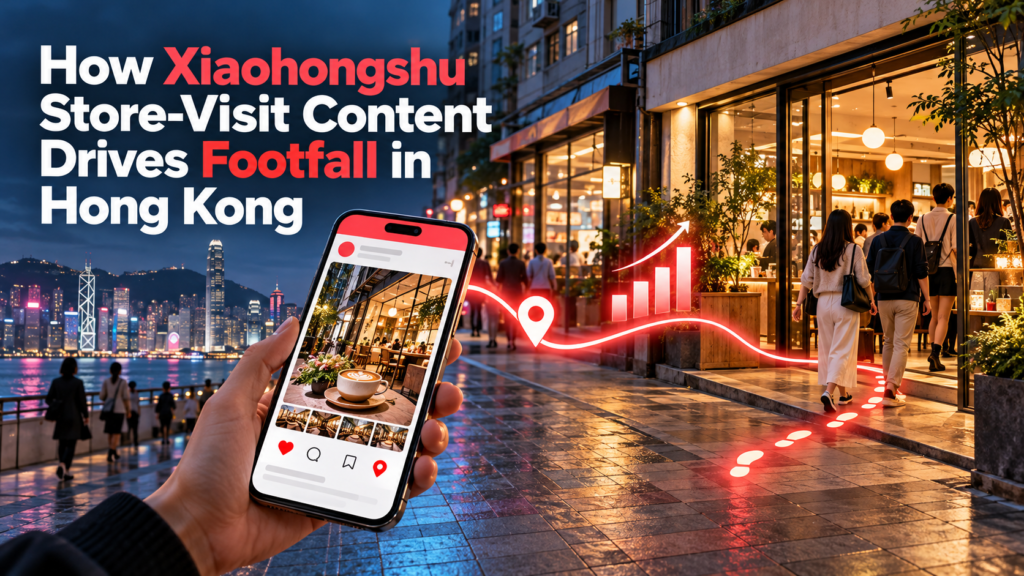
Direct answer: How Xiaohongshu store-visit content drives footfall in Hong Kong comes down to search-led discovery, creator trust and practical visit planning. A useful note does more than show a pretty shopfront: it answers what to buy, how to get there, when to go, what to expect and why the trip is worth saving. For Hong Kong footfall marketing, XHS store-visit content works best when KOLs create honest, route-friendly, offer-led posts that turn curiosity into a planned store visit.
Hong Kong is a natural setting for this approach because visitors already use mobile content to plan compact, high-intent itineraries. HKTB reported 49.9 million visitor arrivals in 2025, including 37.8 million from the Chinese Mainland, so retail, dining and tourism brands have a large audience for location-led discovery. (partnernet.hktb.com)
Why Xiaohongshu matters for Hong Kong footfall
Xiaohongshu is widely used as a lifestyle discovery platform where people search for experiences, read notes, compare options and save ideas before they travel or shop. For Hong Kong retail, that behaviour fits the city’s dense mix of malls, street shops, cafés, clinics, beauty counters, pop-ups and neighbourhood destinations.
The strength of Xiaohongshu store visit Hong Kong content is that it feels like a practical recommendation rather than a broad advert. A creator can show the MTR exit, the queue, the shelf, the fitting room, the payment experience and the “worth it” moment in one note. That makes the store feel easier to choose and easier to reach.
“Footfall starts before the customer leaves home; it starts when a saved note becomes a plan.”

What journey turns a Xiaohongshu search into a store visit?
The journey usually starts with a need-led or place-led query, then moves through creator discovery, saving, sharing, route planning, visiting and purchasing. The practical job of XHS store-visit content is to remove uncertainty at each step, especially for shoppers crossing districts, visiting from Mainland cities or fitting several stops into one Hong Kong day.
A strong journey looks like this:
- Search query: The user searches for terms such as “Hong Kong skincare shop”, “Central café route”, “Tsim Sha Tsui gifts” or a brand name plus “store visit”. The content must match natural search language, not just campaign slogans.
- Creator discovery: The user opens notes from creators whose taste, budget and visual style feel relevant. A Xiaohongshu KOL briefing should therefore define audience fit, not only follower size.
- Save and share: The user saves the note, sends it to a friend or adds it to a travel plan. Clear addresses, district names, product highlights and visit tips make this behaviour more likely.
- Route planning: The user checks transport, walking time, nearby landmarks and opening considerations. Hong Kong content should mention MTR stations, exits, mall levels and recognisable streets where appropriate.
- Store visit: The note reduces friction on arrival because the visitor knows what the storefront, counter or entrance looks like.
- Purchase: The offer, product availability, staff interaction and in-store experience need to match the expectation set by the note.
The content ingredients that move people offline
Store-visit content performs best when it is specific. “Nice shop in Hong Kong” is weak. “Three reasons to stop here after lunch in Causeway Bay, plus the exact shelf to check first” is more useful.
Build each note around a simple promise:
- A clear reason to go: limited item, new menu, service trial, gifting idea, exclusive bundle or convenient stop.
- A recognisable location: district, nearby station, mall level, street view and entrance clues.
- Proof of experience: creator arrival, browsing, staff interaction, product testing and payment moment.
- Planning detail: ideal visit time, expected queue style, reservation note if relevant, nearby pairing ideas.
- Saveable value: checklist, route, mini guide, before-and-after comparison or shopping list.
“A beautiful note creates interest; a useful note creates movement.”
How should brands brief KOLs for Hong Kong campaigns?
A Xiaohongshu KOL briefing should give creators enough structure to be accurate while leaving room for their real voice. Over-scripted notes often feel flat, while vague briefs lead to missing details that matter for footfall.
Include these briefing points:
- Campaign objective: store visits, appointment enquiries, product trials, event attendance or offer redemption.
- Audience: Mainland visitors, local Hong Kong shoppers, students, office workers, families, beauty lovers or tourists.
- Store context: district, transport, store format, peak periods to avoid and must-show areas.
- Key messages: what is genuinely useful, new, seasonal or visit-worthy.
- Compliance checks: use declared collaboration routes and current platform guidance where applicable. Xiaohongshu’s Pugongying help centre lists creator cooperation guidance, review norms and content requirements; Juguang is the platform’s advertising system. (pgy.xiaohongshu.com)
- Creator freedom: allow honest wording, personal tips and natural sequencing.
- Deliverables: number of notes, video length guidance, image count, captions, hashtags, posting window and comment duties.
Practical store-visit brief template
Use this checklist before confirming any creator visit:
- Brand and store name:
- Campaign goal:
- Target audience:
- Store address and district:
- Nearest MTR station, exit and walking direction:
- Products or services to feature:
- Offer or redemption mechanic:
- Required disclaimers or collaboration notes:
- Must-capture scenes:
- Things not to claim:
- Approval contact:
- Comment response owner:
- Tracking method:
- Post-campaign reporting date:
What should creators capture inside a Hong Kong retail visit?
Creators should capture the full visit, not just the hero product. In Hong Kong, where shops may sit inside towers, malls, side streets or station-linked complexes, arrival visuals are often as important as product close-ups.
A detailed shot list should include:
- Opening route: MTR sign, street corner, mall entrance, lift lobby or escalator path.
- Exterior: shopfront, signage, window display and neighbouring landmarks.
- First impression: entrance, lighting, layout and browsing flow.
- Product discovery: shelves, testers, menu boards, display tables or service menu.
- Human interaction: staff greeting, consultation, fitting, tasting or demonstration, with consent.
- Decision moment: creator comparing options, asking a question or choosing a product.
- Offer moment: coupon screen, redemption card, gift-with-purchase or bundle display.
- Payment and exit: cashier, packed product, receipt area or takeaway bag.
- Neighbourhood context: nearby café, landmark, photo spot or second stop to help route planning.
Store-visit offers that feel worth the trip
Good offers reduce hesitation without cheapening the brand. For Xiaohongshu users, the most useful offers are easy to explain in a caption and simple for store staff to recognise.
Consider these options:
- Save-and-show offer: users save the note and show it in store for a small gift, sample or service add-on.
- Route bundle: pair the store visit with nearby experiences, such as “shop, coffee, photo spot”.
- Creator pick set: a curated edit from the KOL, available in store for a limited campaign period without inventing scarcity.
- Appointment-friendly perk: suitable for beauty, wellness, eyewear or consultation-led retail.
- Group visit reward: useful when friends share notes and visit together.
Keep staff briefing tight. The best online offer fails if front-line teams do not recognise the campaign wording, redemption steps or stock limits.
Comment handling playbook
Comments are not just engagement; they are objections, route questions and purchase intent in public view. Assign a response owner before posts go live.
Use this playbook:
- Location questions: reply with district, station and simple direction. Avoid long, confusing routes.
- Price questions: answer accurately if prices are approved to share; otherwise guide users to in-store or official channels.
- Stock questions: confirm only what the store can support. If stock changes often, say so plainly.
- Queue questions: give practical timing guidance without promising a wait time.
- Negative comments: acknowledge, clarify and move sensitive service issues to an appropriate channel.
- Repeated questions: update the pinned comment or creator caption where possible.
Field note from Hong Kong campaign work
Guru Online often sees that the smallest details, such as the right MTR exit or whether a product is on a specific floor, can be the difference between a saved post and an actual visit.
Measurement without made-up benchmarks
A useful measurement framework connects platform engagement to store outcomes without pretending every visit can be perfectly attributed. HKTB’s tourism updates show why visitor movement matters to retail and catering, but each brand still needs its own baseline. (info.gov.hk)
Track metrics in layers:
- Content visibility: impressions, views, search appearances and creator reach.
- Engagement quality: saves, shares, comments, profile visits and direct questions.
- Planning signals: requests for address, route, opening hours, stock and booking links.
- Store signals: coupon redemptions, appointment mentions, QR scans, staff-recorded campaign enquiries and POS campaign codes.
- Sales signals: transactions linked to campaign offers, average basket where available and repeat visits if tracked responsibly.
- Learning signals: which creators, topics, districts, formats and offers generated the strongest intent.
Avoid universal benchmarks. Compare against your own previous campaigns, similar store periods and non-campaign weeks where the data is available.
Six-week workflow for XHS store-visit content
A six-week workflow gives enough time for creator selection, visit planning, approvals and learning.
- Week 1, strategy: define audience, store objective, target districts, offer structure and measurement method.
- Week 2, creator shortlist: review KOL fit, content style, audience comments, past store visits and category relevance.
- Week 3, briefing: finalise the Xiaohongshu KOL briefing, shot list, store staff notes and approval process.
- Week 4, visits: schedule creator visits, capture content, check factual details and prepare comment responses.
- Week 5, publishing: release notes in a staggered pattern, monitor saves and comments, and update pinned information where useful.
- Week 6, optimisation: review content and store data, identify winning angles, refine offers and decide what to repeat.
Five practical FAQs
1. Is Xiaohongshu only for awareness? No. It can support awareness, consideration and store visits when content includes search-friendly wording, practical route details and a clear reason to visit.
2. Should every post use a KOL? Not always. KOLs can create reach and trust, while brand-owned notes can maintain accurate store information, offers and evergreen guides.
3. What makes a Hong Kong store visit note saveable? A clear route, honest product picks, visible storefront, useful price or offer context, and a simple itinerary angle.
4. How many creators should a campaign use? There is no universal number. Choose based on budget, store capacity, category, audience segments and how many content angles you can support well.
5. What should we avoid claiming? Avoid unsupported superlatives, fake scarcity, invented results, inaccurate stock statements and any claim the store team cannot confidently honour.
SEO notes for publishing
Title tag suggestion: Xiaohongshu Store Visits in Hong Kong
Meta description suggestion: Learn how Xiaohongshu store-visit content can drive Hong Kong footfall through KOL briefs, offers, comments and measurement.
Final takeaway
How Xiaohongshu store-visit content drives footfall in Hong Kong is simple in principle: make the visit feel desirable, credible and easy to plan. The execution requires disciplined briefs, creator-native storytelling, strong shop-floor coordination and measurement that links online intent to offline action. If you are planning Hong Kong footfall marketing and want a practical XHS store-visit content workflow, Guru Online can help shape the brief, campaign structure and measurement plan.