15 TikTok Video Formats Hong Kong Brands Can Use Overseas
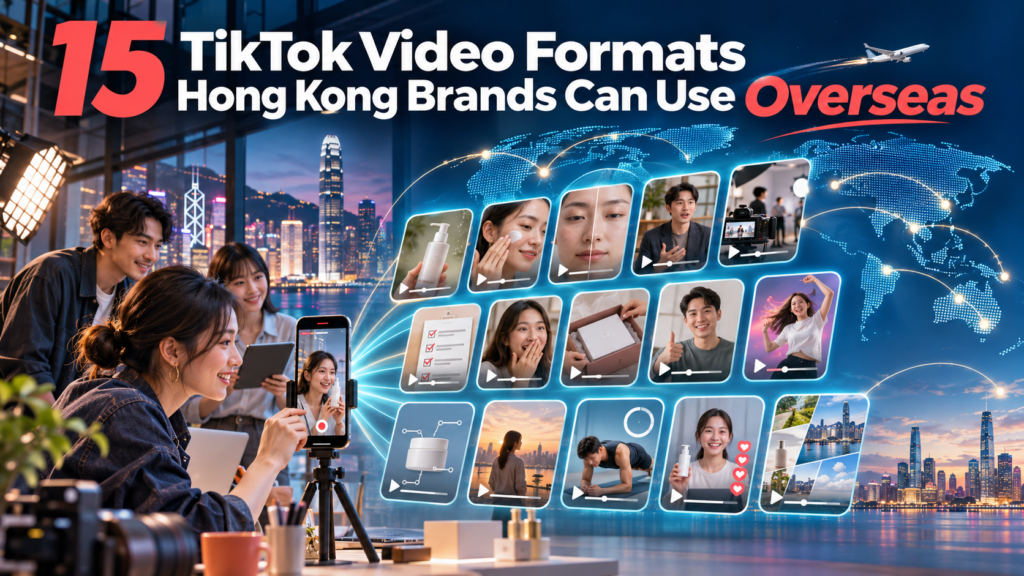
TikTok can help Hong Kong brands overseas turn product knowledge, founder stories and market entry messages into clear, repeatable short-form storytelling. This guide gives brand and marketing managers 15 practical TikTok video formats, plus a one-day production plan and a creative testing checklist for cross-border localisation. Guru Online is a TikTok for Business authorised agent, with experience in short-form storytelling and cross-border brand localisation, supporting brands that need market-ready creative without inventing results or relying on guesswork. (tiktokforbusinessoutbound.com)
How should Hong Kong brands choose TikTok video formats for overseas markets?
Choose formats by matching one customer question to one creative job: explain, reassure, demonstrate, compare use cases within your own product range, or invite action. TikTok’s official creative guidance recommends a TikTok-first approach, vertical creative, sound, safe-zone awareness, people-led content and continuous testing, so each format below is designed to be filmed quickly and tested responsibly. (ads.tiktok.com)
“Localisation is not translation; it is making the same brand promise feel native.”
Before production, check product claims, landing pages, intellectual property, market-specific restrictions and brand safety settings. TikTok’s advertising policies cover restricted categories, ad creative standards, landing page expectations and IP rules, while Business Center brand safety tools help advertisers manage suitability controls. (ads.tiktok.com)
Which 15 TikTok content formats are most repeatable for overseas campaigns?
1. Problem-solution demo
Use this when overseas audiences do not yet understand why your product matters.
- Hook: “If you struggle with this, try this instead.”
- Shot sequence: Show the problem, introduce the product, demonstrate the fix, show the end state.
- Creator role: Practical guide.
- CTA: “Save this for your next purchase decision.”
- Localisation note: Replace Hong Kong-specific pain points with local usage situations.
- Key metric: Average watch time.
2. Founder explains the mission
This works for brands entering a market where trust is still forming.
- Hook: “Here’s why we built this in the first place.”
- Shot sequence: Founder on camera, origin insight, product belief, customer invitation.
- Creator role: Brand storyteller.
- CTA: “Follow our overseas launch journey.”
- Localisation note: Avoid idioms; make the founding reason universally clear.
- Key metric: Profile visits.
3. Three reasons to try it
Use this for straightforward product education without overloading the viewer.
- Hook: “Three reasons this belongs in your routine.”
- Shot sequence: Reason one, reason two, reason three, product close-up.
- Creator role: Product explainer.
- CTA: “Tap to learn more.”
- Localisation note: Prioritise reasons that match local climate, habits or gifting norms.
- Key metric: Click-through rate.
4. Day-in-the-life integration
This format shows the product in context rather than as a hard sell.
- Hook: “A regular day, made a little easier.”
- Shot sequence: Morning setup, moment of need, product use, evening payoff.
- Creator role: Lifestyle user.
- CTA: “Comment where you would use this.”
- Localisation note: Use local rooms, routines, meals or commute patterns where relevant.
- Key metric: Comment rate.
5. Before-and-after transformation
Use this only when the transformation is honest, demonstrable and compliant.
- Hook: “Before using it, after using it.”
- Shot sequence: Before scene, process steps, after scene, reminder of use case.
- Creator role: Demonstrator.
- CTA: “Watch the full routine on our profile.”
- Localisation note: Avoid exaggerated claims; adapt expectations to local regulations.
- Key metric: Completion rate.
6. Myth-busting explainer
This helps when overseas buyers bring assumptions from another market.
- Hook: “People often misunderstand this.”
- Shot sequence: State the myth, explain the truth, show proof in product detail, recap.
- Creator role: Category educator.
- CTA: “Send this to someone comparing options.”
- Localisation note: Address one local misconception at a time.
- Key metric: Share rate.
7. Packing or unboxing ritual
This suits beauty, food, lifestyle, electronics, gifting and premium retail.
- Hook: “Pack an order with us.”
- Shot sequence: Empty box, product placement, detail shots, finished package.
- Creator role: Behind-the-scenes host.
- CTA: “Which item should we pack next?”
- Localisation note: Show packaging information required or expected in the target market.
- Key metric: Rewatch rate.
8. Local creator first impression
Creator-led content can make a brand feel less distant when entering a new market.
- Hook: “I’m trying this Hong Kong brand for the first time.”
- Shot sequence: Creator intro, first look, first use, honest reaction.
- Creator role: Local tester.
- CTA: “Ask me what you want tested next.”
- Localisation note: Brief creators on claims, pronunciation and cultural sensitivities.
- Key metric: Engagement rate.
9. Comment-to-video response
This turns audience questions into a repeatable content engine.
- Hook: Display the question on screen.
- Shot sequence: Read comment, answer directly, show supporting detail, invite next question.
- Creator role: Community responder.
- CTA: “Leave your question below.”
- Localisation note: Answer in the audience’s preferred language style, not just translated copy.
- Key metric: Comment volume.
10. Mini tutorial
A concise tutorial reduces purchase hesitation by showing exactly how to use the product.
- Hook: “Here’s the simplest way to use it.”
- Shot sequence: Tool or product ready, step one, step two, finished result.
- Creator role: Instructor.
- CTA: “Save this tutorial.”
- Localisation note: Adapt units, sizing, plugs, ingredients or usage occasions.
- Key metric: Saves.
11. Street-style reaction
Use this to gather light, human feedback without manufacturing claims.
- Hook: “We asked people to react to this.”
- Shot sequence: Product reveal, reaction one, reaction two, brand sign-off.
- Creator role: Interview host.
- CTA: “Would you try it?”
- Localisation note: Secure permissions and keep questions culturally comfortable.
- Key metric: View-through rate.
12. Checklist video
Checklist formats help B2B, travel, education, retail and service brands simplify decisions.
- Hook: “Check these before you buy.”
- Shot sequence: Checklist item one, item two, item three, recommendation.
- Creator role: Decision coach.
- CTA: “Save before you shop.”
- Localisation note: Make checklist criteria relevant to local buyer priorities.
- Key metric: Save rate.
13. Product detail macro tour
Use close-up storytelling when quality, texture, craftsmanship or design matters.
- Hook: “Small details you might miss.”
- Shot sequence: Detail one, detail two, detail three, full product reveal.
- Creator role: Detail narrator.
- CTA: “Tap for specifications.”
- Localisation note: Explain unfamiliar Hong Kong design references simply.
- Key metric: Product page clicks.
14. Offer walkthrough
This format is useful when the purchase path needs explanation.
- Hook: “Here’s how to order from overseas.”
- Shot sequence: Product selection, key purchase step, delivery or service note, final reminder.
- Creator role: Conversion guide.
- CTA: “Start from the link in profile.”
- Localisation note: Do not promise delivery, pricing or availability unless verified.
- Key metric: Landing page views.
15. Brand values story
This works when the brand needs emotional relevance, not only product explanation.
- Hook: “This is the belief behind our brand.”
- Shot sequence: Human moment, brand value, product connection, closing line.
- Creator role: Values narrator.
- CTA: “Follow for more stories from Hong Kong.”
- Localisation note: Translate the value into a local human situation.
- Key metric: Follower growth.
What should a one-day TikTok production workflow include?
A one-day workflow keeps teams focused and prevents localisation from becoming an afterthought. The aim is not to rush strategy, but to turn approved ideas into enough creative variations for testing.
Production checklist:
- 09:00–09:45, creative briefing: Marketing lead confirms audience, offer, claim boundaries and priority format. Deliverable: approved shot list.
- 09:45–10:30, localisation review: Local market lead checks language, cultural references, CTA and compliance concerns. Deliverable: localised script notes.
- 10:30–13:00, filming block: Creator, videographer and product handler capture hooks, demonstrations, close-ups and CTA variations. Deliverable: raw footage library.
- 14:00–16:30, edit sprint: Editor prepares vertical cuts with captions, sound direction and safe-zone checks. Deliverable: first video batch.
- 16:30–17:30, policy and brand review: Brand manager checks claims, landing page consistency and IP usage. Deliverable: approved or amended assets.
- 17:30–18:30, upload preparation: Media or social specialist names files, records hypotheses and prepares posting or ad setup. Deliverable: test-ready creative pack.
“A fast production day only works when the slow thinking has already happened.”
How should teams test creative without losing control of the brand?
Testing should isolate meaningful variables while keeping the brand promise consistent. TikTok’s own performance creative guidance recommends continuous testing and learning, so each video should carry a clear hypothesis rather than being judged by instinct alone. (ads.tiktok.com)
Creative testing matrix:
- Variable: Hook wording
- Hypothesis: A customer pain-point hook will hold attention better than a product-led hook.
- Success criterion: Stronger early retention and average watch time.
- Learning log: Hook line, market, format, audience note, result, next action.
- Variable: Creator role
- Hypothesis: A local tester may create more trust than a brand-only presenter.
- Success criterion: Higher engagement rate or comment quality.
- Learning log: Creator type, language style, objections raised, response plan.
- Variable: CTA
- Hypothesis: “Save this” may work better for tutorials, while “tap to learn more” may suit purchase-ready viewers.
- Success criterion: Saves, clicks or landing page views matching the campaign objective.
- Learning log: CTA, format, metric movement, decision.
- Variable: Localisation depth
- Hypothesis: Local examples will improve relevance versus direct translation.
- Success criterion: Better comments, watch time or qualified clicks.
- Learning log: Adapted phrase, cultural note, approval status, learning.
What compliance checks should be completed before launch?
Every overseas campaign needs a final check before spend or scale. Review whether the product is permitted in the target market, whether any claim needs substantiation, whether the landing page matches the video, and whether third-party names, logos, music, clips or creator disclosures are properly handled. TikTok’s policies and brand safety resources should be used as references during review, not only after a problem appears. (ads.tiktok.com)
Useful official references:
- TikTok Advertising Policies: https://ads.tiktok.com/help/article/tiktok-advertising-policies
- Creative best practices for performance ads: https://ads.tiktok.com/help/article/creative-best-practices
- TikTok Brand Safety Center: https://ads.tiktok.com/business/en-US/brand-safety
- Intellectual Property Infringement policy: https://ads.tiktok.com/help/article/tiktok-ads-policy-intellectual-property-infringement
- Guru Online TikTok for Business partner page: https://www.tiktokforbusinessoutbound.com/partners/178
Where should Hong Kong brand teams start?
Start with three formats: one product education video, one creator-led local reaction and one conversion-focused offer walkthrough. This gives the team a balanced read on understanding, trust and action without overcomplicating production. Guru Online can support Hong Kong brands overseas with TikTok-first creative planning, short-form storytelling and cross-border localisation, while keeping claims, policy checks and market fit central to the process.
“The best overseas creative feels planned by the brand, but understood by the local audience.”
FAQs
What is the safest TikTok video format for a first overseas test?
A problem-solution demo is usually a sensible starting point because it explains the product clearly and gives teams a clean metric to monitor, such as average watch time.
How much should a Hong Kong brand localise each video?
Localise the hook, example, CTA, captions and creator brief. Keep the core brand promise consistent, but make the viewing situation feel natural to the target market.
Should every TikTok video include a creator?
No. Creator-led videos are useful for trust and local relevance, but brand-led explainers, product detail tours and tutorials can also work when the message is clear.
What metric should marketing managers review first?
Review the metric tied to the video’s job. For education, look at watch time or completion. For conversion, look at clicks or landing page views.
Why work with a TikTok for Business authorised agent?
An authorised agent can help structure campaigns, creative workflows and localisation checks around TikTok-first requirements. Guru Online is listed as a TikTok for Business authorised agent. (tiktokforbusinessoutbound.com)